Why Riff Forge was built.
A clearer way to learn the neck
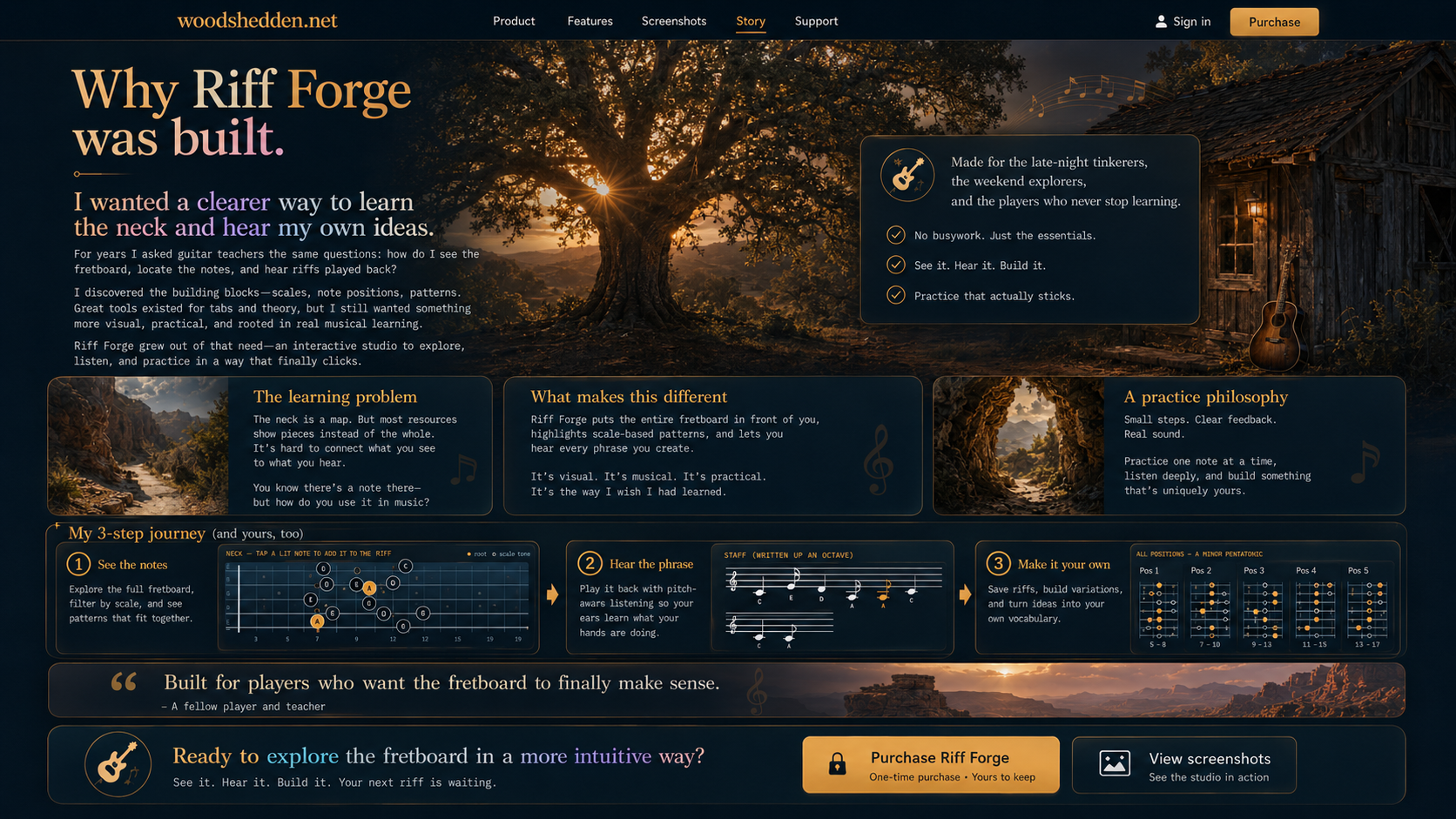
The idea began with a recurring question: how can a player clearly see the fretboard, locate the notes, and hear original riffs played back?
The learning problem
Many useful tools teach tabs, scales, and theory, but it can still be difficult to connect the complete fretboard with the sound of a musical phrase.
What makes Riff Forge different
Riff Forge keeps the fretboard, scale patterns, riff playback, notation, guided listening, and saved practice ideas in one visual studio.
A three-step journey
See the notes, hear the phrase, and make it your own by saving variations and developing a personal musical vocabulary.
Practice philosophy
Use small steps, clear visual feedback, real sound, and one-note-at-a-time listening to build understanding and confidence.
 Home
Product
Features
Screenshots
Story
Support
Sign in
Purchase
Purchase Riff Forge
View screenshots
Home
Product
Features
Screenshots
Story
Support
Sign in
Purchase
Purchase Riff Forge
View screenshots